Teacher Gift: Soup Bowl Cozy

The turkey is eaten and now we are diving straight into the Christmas season. It’s time to gather gifts for everyone special in your life. I like to shop for presents. (I’m almost done already!) But some gifts are homemade.

Teachers are one of the most special people in my life. I know how hard that job is. I appreciate all the people pouring themselves into my kid. So I like to show my gratefulness with a handmade crocheted gift.

I have a couple of rules for teacher gifts.

  1. It has to be unique. I want it to be something they can’t find anywhere else. So I try to make an original design every year, or at least adapt something so it’s truly special.
  2. It has to be something I would give a friend. No nose warmers or kitchy stuff. If it’s decor, it should be beautiful. If it’s functional, it should be useful and beautiful.
  3. It has to be quick. I wish I had time to make a sweater for every person who impacts my life and makes it fuller. But I don’t have that kind of time. My kid has 16 (what?!) teachers, helpers, coaches, etc. so my goal is a 30-60 minute make.
  4. The most important rule: It can’t be about teaching. Your kid is surprised to see his teacher in the grocery store, but you and I know she is a person-who does other things besides teach. I promise after the first year of teaching, your kid’s teacher has a lifetime’s worth of “World’s Greatest Teacher” mugs and pencil holders with apple motifs. The gifts that stand out show appreciation for the teacher as a person.

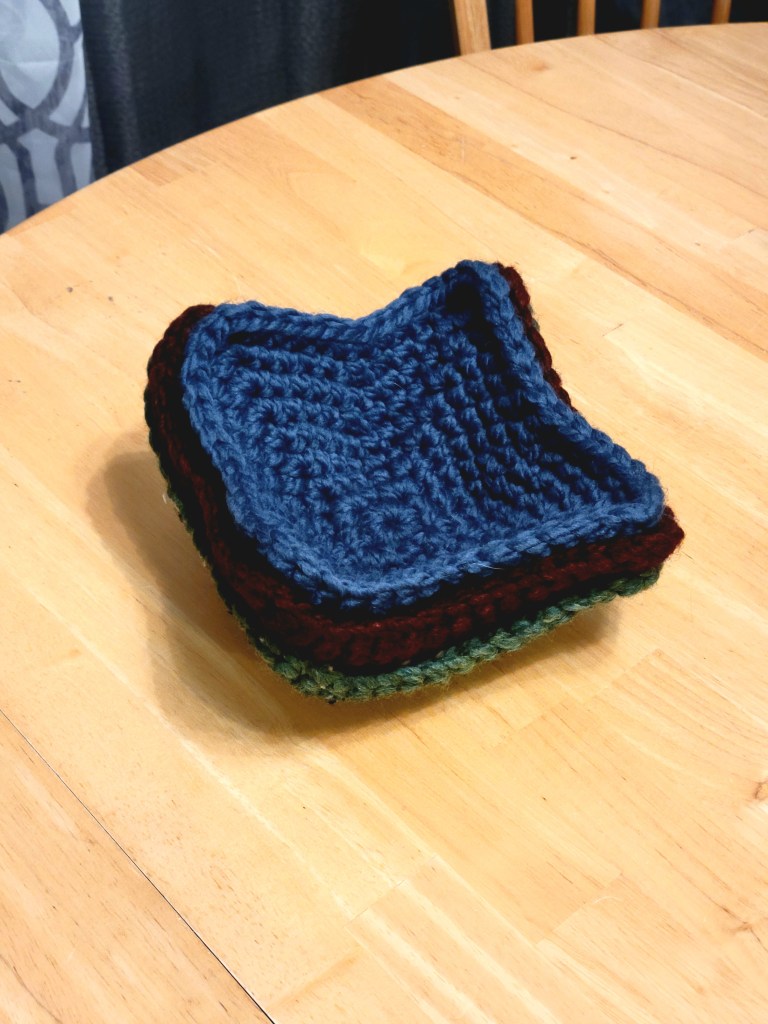
This year, I designed a soup bowl cozy. The shape is like a quilted soup bowl hot pad someone made for me. It comes up and around the bowl to protect your hands from a hot dish. It will perfectly fit a large Corelle cereal or soup bowl.

I hope during the holiday break, loved ones can cozy up by the fire with a hot bowl of chili or hearty soup and veg out to Christmas movies. Make some for teachers and friends. Send them to distant family members you want to hug. Make a few for your own family to have ready for a warm winter meal.

Soup Bowl Cozy

Difficulty
Advanced Beginner

Finished Measurements
7 inches x 7 inches x 2 inches

Made to fit a large (6″) Corelle soup or cereal bowl

Materials
40 yds super bulky (#6)
Hook size US N (9mm)
Samples shown using Lion Brand Wool-Ease Thick & Quick. I got 2 cozies out of each ball.

Gauge
9 sc/10 rnds = 4×4”/10x10cm

Notes

  • Pattern is written in US terms and
    Imperial measurements.
  • Work instructions in brackets [ ] the number of times indicated.
  • For a more finished look, instead of a standard sc3tog work it as follows: Insert hook in the next front loop 3 times and pull up a loop, yo and pull through both loops on the hook.
  • Find standard abbreviations here.

Bowl Cozy

Rnd 1: 8 sc in ML. Join with a sl st to the first sc.
8 sc

Rnd 2: Ch 1, 2 sc in the first st, sc in the next st, [3 sc in the next st, sc in the next st] 3 times, sc in the same st as the first sc. Join with a sl st to the first sc.
16 sc

Rnd 3: Ch 1, 2 sc in the first st, sc in the next 3 sts, [3 sc in the next st, sc in the next 3 sts] 3 times, sc in the same st as the first sc. Join with a sl st to the first sc.
24 sc

Rnd 4: Ch 1, 2 sc in the first st, sc in the next 5 sts, [3 sc in the next st, sc in the next 5 sts] 3 times, sc in the same st as the first sc. Join with a sl st to the first sc.
32 sc

Row 5: Ch 1, 2 sc in the first st, sc in the next 7 sts, [3 sc in the next st, sc in the next 7 sts] 3 times, sc in the same st as the first sc. Join with a sl st to the first sc.
40 sc

Row 6: Ch 1, 2 sc in the first st, sc in the next 3 sts, sc3tog, sc in the next 3 sts, [3 sc in the next st, sc in the next 3 sts, sc3tog, sc in the next 3 sts] 3 times, sc in the same st as the first sc. Join with a sl st to the first sc.
40 sc

Row 7: Ch 1, 2 sc in the first st, sc in the next 9 sts, [3 sc in the next st, sc in the next 9 sts] 3 times, sc in the same st as the first sc. Join with a sl st to the first sc.
48 sc

Rnd 8: Ch 1, 2 sc in the first st, sc in the next 4 sts, sc3tog, sc in the next 4 sts, [3 sc in the next st, sc in the next 4 sts, sc3tog, sc in the next 4 sts] 3 times, sc in the same st as the first sc. Join with a sl st to the first sc.
48 sc

Rnd 9: Ch 1, 2 sc in the first st, sc in the next 11 sts, [3 sc in the next st, sc in the next 11 sts] 3 times, sc in the same st as the first sc. Join with a sl st to the first sc.
56 sc

Rnd 10: Ch 1, 2 sc in the first st, sc in the next 13 sts, [3 sc in the next st, sc in the next 13 sts] 3 times, sc in the same st as the first sc. Join with a sl st to the first sc.
64 sc

Weave in ends. Block as desired.
LTL Baby Bonnet

Shown with Ruffle Brim

My friends at Let Them Live help women in difficult times facing hard decisions. According to the website, 73% of women have abortions because of financial burden. “No mother should have to choose between paying bills or her baby’s life.” Support from Let Them Live allows moms to choose life for their babies. The children born with the help of Let Them Live celebrate new life with the mothers by giving handmade gifts such as blankets, hats, and clothing.

You can support this organization financially by going to their website and offering a donation or pledging monthly support. My maker friends can also help by making items for donation. For details and questions about making baby items, contact Amy (IG prolifeknitter) at amy.d@letthemlive.org.

Here is a pattern for a cute baby bonnet they would love to gift to a mom and her baby. After you make some for Let Them Live, you can make more for your family and friends, church and local charities. I hope this is a pattern you will return to time after time for an heirloom to celebrate new life!

Shown with Scallop Brim

LTL Baby Bonnet

Difficulty
Advanced Beginner

Finished Measurements
Newborn (6-12 Months, 12-24 Months, Toddler, Child)
Crown measures 14 (15, 16, 17, 19) inches

Materials
Any yarn (recommend worsted or smaller)
Hook appropriate for yarn
Samples shown using DK (#3) yarn and US G hook (4mm)

Gauge
20 dc/10 rnds = 4×4”/10x10cm (not critical)

Notes

  • Pattern is written in US terms and
    Imperial measurements.
  • Pattern was tested using DK weight yarn, but yarn weight and gauge is not critical because instructions are all given in measurements rather than stitch count.
  • Work instructions in brackets [] the number of times indicated.
  • Find standard abbreviations here.

Crown

Rnd 1: In Magic Loop, 10 sc. Join to the first st with a sl st.
10 sc

Rnd 2: Ch 2 (does not count as a st throughout), 2 dc in each st around. Join to the first st with a sl st.
20 dc

Rnd 3: Ch 2, [2 dc, dc] around. Join to the first st with a sl st.
30 dc

Rnd 4: Ch 2, [2 dc, dc in the next 2 sts] around. Join to the first st with a sl st.
40 dc

Continue increasing as established until Crown measures 4.5 (4.75, 5, 5.5, 6) inches across. You will have a multiple of 10 sts.

Last Rnd of Crown: (This is now the RS) Ch 1, working in the blo sc in each st around. Join to the first st with a sl st. Turn.

Brim

You will now work in Rows.

Row 1 (WS): Ch 1, sc in the first st, [ch 3, sk next 3 sts, sc in the next st] until approximately 1.5 (1.5, 2, 2, 2.5) inches are left unworked. The number of stitches unworked does not matter. Turn.

Row 2 (RS): Ch 3 (counts as a dc throughout), 4 dc in the next ch-3 sp, [sk sc, 4 dc in the next ch-3 sp] across to the last sc, dc in the last sc. Turn.

Row 3: Ch 1, sc in the first st, ch 3, sk next 4 sts, [sc between the 4th st of one set of dcs and the first st of the next set, ch 3, sk next 4 sts] across to the last st, sc in the 3rd ch of the turning ch. Turn.

Repeat Rows 2 & 3 until work measures 2.25 (2.5, 2.5, 2.75, 3) inches from Magic Loop or until desired length.

Choose a Ruffle or a Scallop for finishing.

Ruffle

End Brim with a Row 2.

With WS facing and working in the blo, sl st in each st across Brim. Turn.

Ch 4, working in the blo of the last row of the Brim (this is the loop opposite from the sl st row), tr in the same st, 2 tr in each st across. Finish off.

Scallop

End Brim with a Row 3.

Sl st in first st, [4 dc in ch-3 sp, sl st in the next st] across. Finish off.

Ties

The ties are made with a crocheted I-cord. If you prefer, you can use a simple chain or sew on a knitted I-cord instead.

Create a crocheted I-cord as follows. Leaving a 48-inch long tail, make a slip knot. * Make a loop on your hook by bringing the long tail over the hook front to back, yo with working yarn, and pull through both loops. Repeat from * until I-cord measures 12 inches.

Drop the long tail. With RS facing, sc evenly along the left edge of Brim, sc in each unworked st on the Crown, sc evenly along the right edge of the Brim.

Pick up a second 48-inch strand and continue making an I-cord for 12 inches.

Finish off. Weave in ends. Block as desired.

Tech edited by Fiat Fiber Arts.

Summer Stitching Bingo

It’s summertime! I love the warm weather and change of pace! I hope you have more time to relax and knit or crochet. I have so much I want to make, I can’t focus on one thing.

So let’s play bingo! Save the image above and mark it every time you complete a square. When you mark a square or make Bingo, tag me on Instagram and use #summerstitchingbingo. Show me your summer makes, and I’ll share them on my IG!

Light Up the Holidays!

Happy Holidays, Merry Christmas and Happy New Year!

Add a little (or a lot!) of sparkle to your festive decor with decorative lanterns inside and out. Or make some last-minute gifts for family, friends, and teachers. These lanterns are awesome because they are so quick to make. It takes me less than 2 hours to make one!

The filet crochet designs shown below of a Christmas star, tree, and snowflake are fun to make and are included in the pattern download. You can even share your creativity by designing your own chart! The instructions for making your own design are also in the pattern.

I love Christmas presents. Can I give you a Christmas present?? Below you can find the pattern for the Peppermint Stripe Lantern shown at the top left. I will leave it here for a limited time through Christmas. You can purchase the entire pattern including the filet crochet designs by visiting the Quart Jar Lantern page. And don’t forget to pop onto the Patterns page to find a pattern to gift a friend or yourself! Merry Christmas!!

Peppermint Stripe Lantern

Difficulty
Advanced Beginner

Finished Measurements
Lantern sleeve covers a 1 quart canning jar

Materials
Worsted weight mercerized cotton
(Fundamental Cotton in Lipstick Red by
Yarn Bee: 3.52 oz/164 yds), approx. 80-100 yds
US Size F/5 (3.75mm) hook
Tapestry needle
1 Quart canning jar
LED Puck light

Gauge
18 dc/9 rnds = 4×4”/10x10cm

Notes

  • Pattern is written in US terms and
    Imperial measurements.
  • Gauge is very tight to create a dense
    fabric that will block light. To make
    the design show up and contrast well,
    work chs a little looser compared to
    gauge.
  • Beginning ch 2 does not count as a
    stitch throughout.
  • The first st of every row is worked in
    the same st as the join.

Base

Ch 2.

Rnd 1: Work 8 sc in the second ch
from the hook, join with a sl st to the
first sc.
8 sc

Rnd 2: Ch 2 (does not count as a
st), work 3 dc in each st around, join
with a sl st to the first dc.
24 dc

Rnd 3: Ch 2, [2 dc, dc in the next st]
around, join.
36 dc

Rnd 4: Ch 2, [2 dc, dc in the next 3
sts] around, join.
45 dc

Rnd 5: Ch 2, working in the blo
around, [2 dc, dc in the next 8 sts]
around, join.
50 dc

Peppermint Stripe

Rnd 6: Ch 2, dc in the first st, dc in
the next 6 sts, [ch 2, dc in the next st,
sk 2 sts, dc in the next 7 sts] 4 times,
ch 2, dc in the next st, sk the last 2
sts, join with a sl st to the first dc.
40 dc, 5 ch-2 sp, (each repeat has 7
dc, 1 ch-2 sp, 1 diagonal dc)

Rnds 7-15: Sl st in the next 2 sts, ch
2, starting in the same st as the last
sl st [dc in the next 5 sts, 2 dc in the
ch-2 sp, ch 2, fptr around the post of
the diagonal st on the rnd below (that
is the st right after the ch-2 sp), sk 2
sts] 5 times, join to the first dc.
35 dc, 5 ch-2 sp, 5 tr (each repeat has
7 dc, 1 ch-2 sp, 1 tr)

Rnd 16: Ch 2, [dc2tog 3 times; work-
ing in the next st and the ch-2 sp,
dc2tog; working in the same ch-2 sp
and the top of the tr, dc2tog] around,
finish off with an invisible join.
25 dc

Finishing

Weave in ends.

If desired block as follows. Soak for
at least 20 minutes and press excess
water out with a towel. Stretch over a
1 quart canning jar and allow to dry.
I don’t recommend using a real flame
in this lantern because the cover is
flammable. I recommend using a bat-
tery operated LED light.

Get the full version!

Join the Sock KCAL!

Today is the first day of the Jems Luxe Fibers Sock Knit and Crochet Along! We are going live on Zoom tonight, March 22nd, and every Tuesday night at 7pm c to learn together how to make the perfect socks. Contact Jems Luxe Fibers on Instagram for the Zoom link.

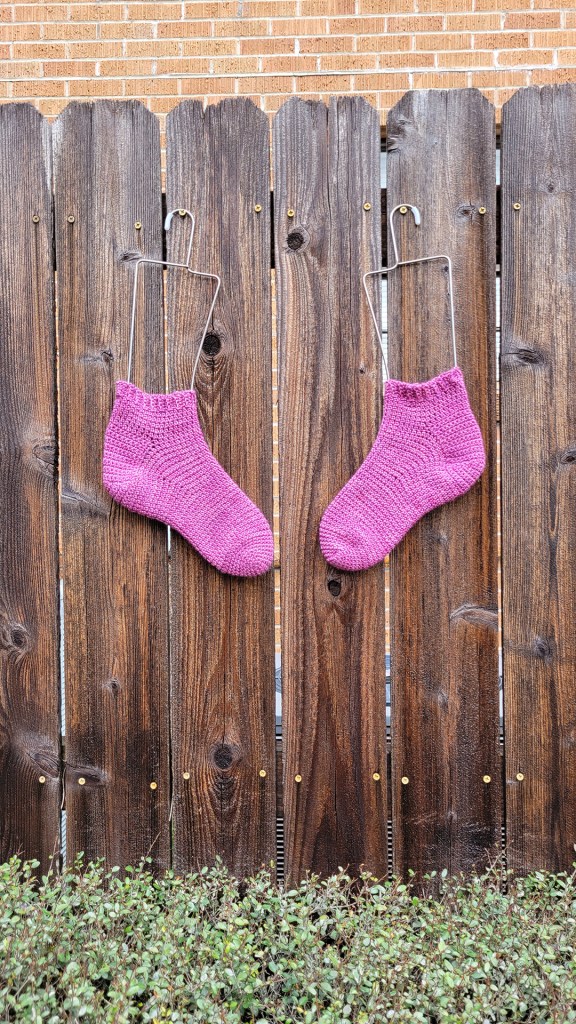
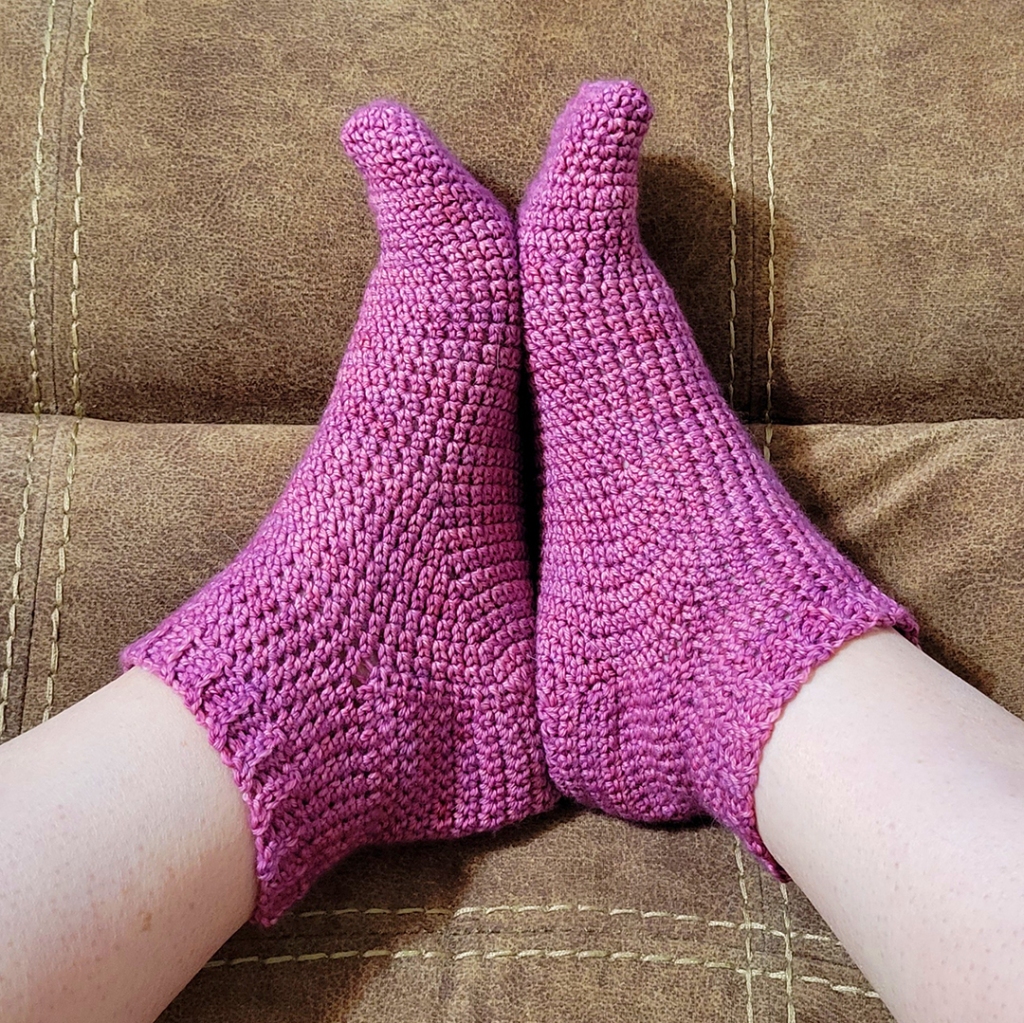
I have the perfect crochet pattern for the event. Let your favorite hand dyed DK yarn from Jems Luxe Fibers shine with the Vanilla Crocheted Socks. Cozy socks constructed with a traditional gusset and heel turn make a perfect fit. The pattern is free during the KCAL. Download it here!

Knitters can join in as well. You can download Crazy Sock Lady’s DK Weight Vanilla Socks here, also free! Or choose your own pattern. We always have a good time with Judy and Emily on Zoom.

Knitting a Top Down Sweater: Dividing for Sleeves

When you are knitting a top down sweater like a yoke or raglan pattern, after you complete the shoulders and top of bust, you will separate the sleeve stitches from the body stitches. The sleeve stitches will be held unworked as you finish the body down to the waist.

Joining the front and back of body creating a sleeve

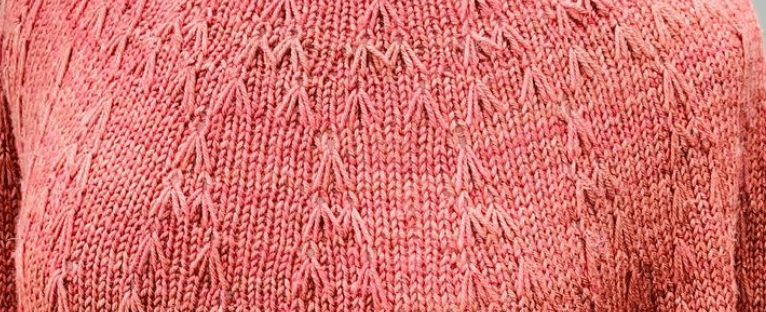
In the Fireworks pattern by Olive Knits, at the beginning of the round you will work a few extra stitches before you separate the body and sleeves. This is because your BOR (beginning of round) is at the top of the shoulder and you must first work to the stitches that will be under the arm. Where you place your first marker is going to be the new BOR. Then you will continue by working a certain number of stitches for the front, slipping the appropriate number of stitches for one arm PURLWISE onto waste yarn, adding a few stitches under the arm, working a certain number of stitches for the back (this brings the front and back together), slipping stitches purlwise for the other arm, adding stitches for under the other arm, and joining the back to the front.

For other top down patterns, the process is the same, but the position of the BOR will change the process a little. A well written pattern will give exact numbers of stitches to work and slip and in what order.

Most patterns suggest holding sleeve stitches on waste yarn. But if you have extra cables you can use those instead. It is important that you use a generous length of waste yarn or a long cable so it will be easy for you to try on your sweater. That’s one of the big advantages of making a top down sweater!

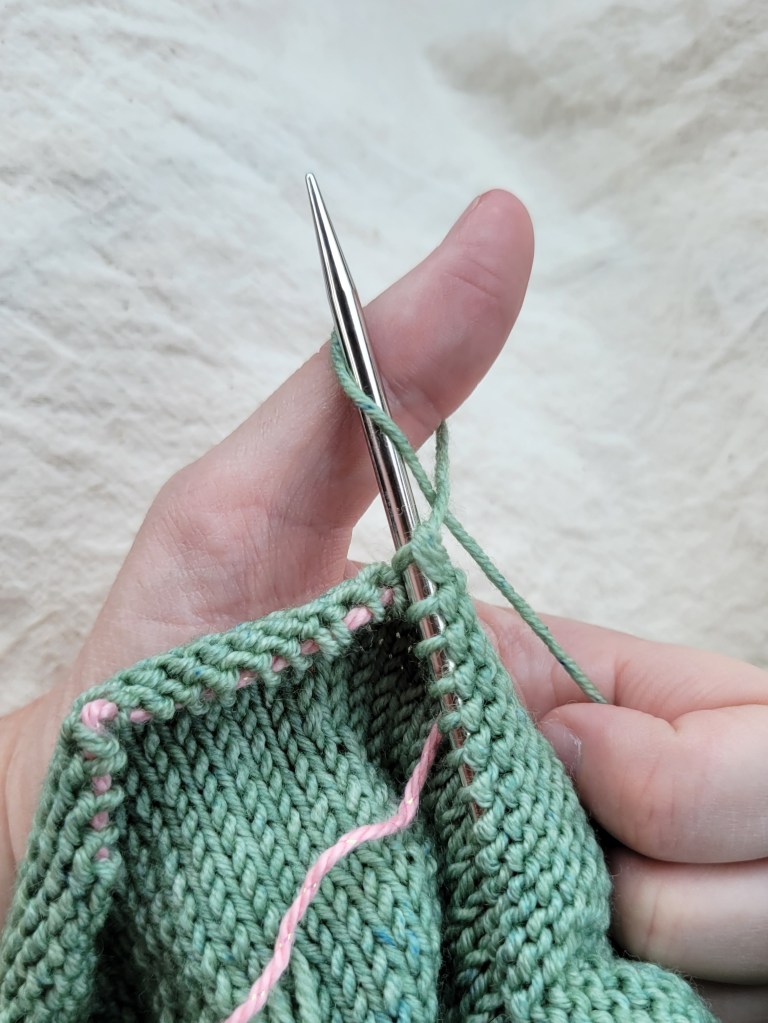
To slip stitches to waste yarn, you will need a tapestry needle and a generous length of waste yarn. (See images below) I recommend using a contrasting yarn in a lighter weight than your work. Thread your waste yarn on your tapestry needle, but don’t knot it. Slip stitches PURLWISE onto the tapestry needle the same way you would slip them from the left to the right needle. Continue working your stitches down your waste yarn, but don’t let them fall off the other end! When you have the appropriate number of stitches slipped for one sleeve, tie the ends of your waste yarn together so you don’t drop the stitches. Be sure to leave plenty of room for you to try on your sweater.

If you are using cable needles, use any needle size smaller than what you are knitting with. This keeps from stretching your stitches and changing the gauge. Slip stitches PURLWISE from the left needle to the new cable being careful to not let them slip off the other end. Secure your needles together so stitches won’t fall off as you are working the body. Be sure to use a cable long enough to allow you to try on your sweater!

My favorite way to hold sleeve stitches is on an interchangeable cable so the needles don’t get in the way. For this technique, you will need:

  • an extra cable long enough to allow you to try on your sweater
  • a needle any size smaller than what you are knitting with
  • something to secure your cable, like a connection piece or stoppers

Attach the needle to one end of the cable and a connection piece or a stopper to the other end. Slip your stitches PURLWISE as described. Then replace the needle with the other end of the connection piece or the other stopper.

After your sleeves are separated from the body, you are ready to work the rest of the body! You will come back to the sleeves after the body is complete.

Find more details on the Fireworks KAL here.

Slipping stitches purlwise onto waste yarn
Backward loop cast on under the arm
Add marker between 2 cast on stitches to mark the center under the arm
Materials for holding stitches on an interchangeable needle cable
Slipping stitches onto a cable

Get Your Swatch On!

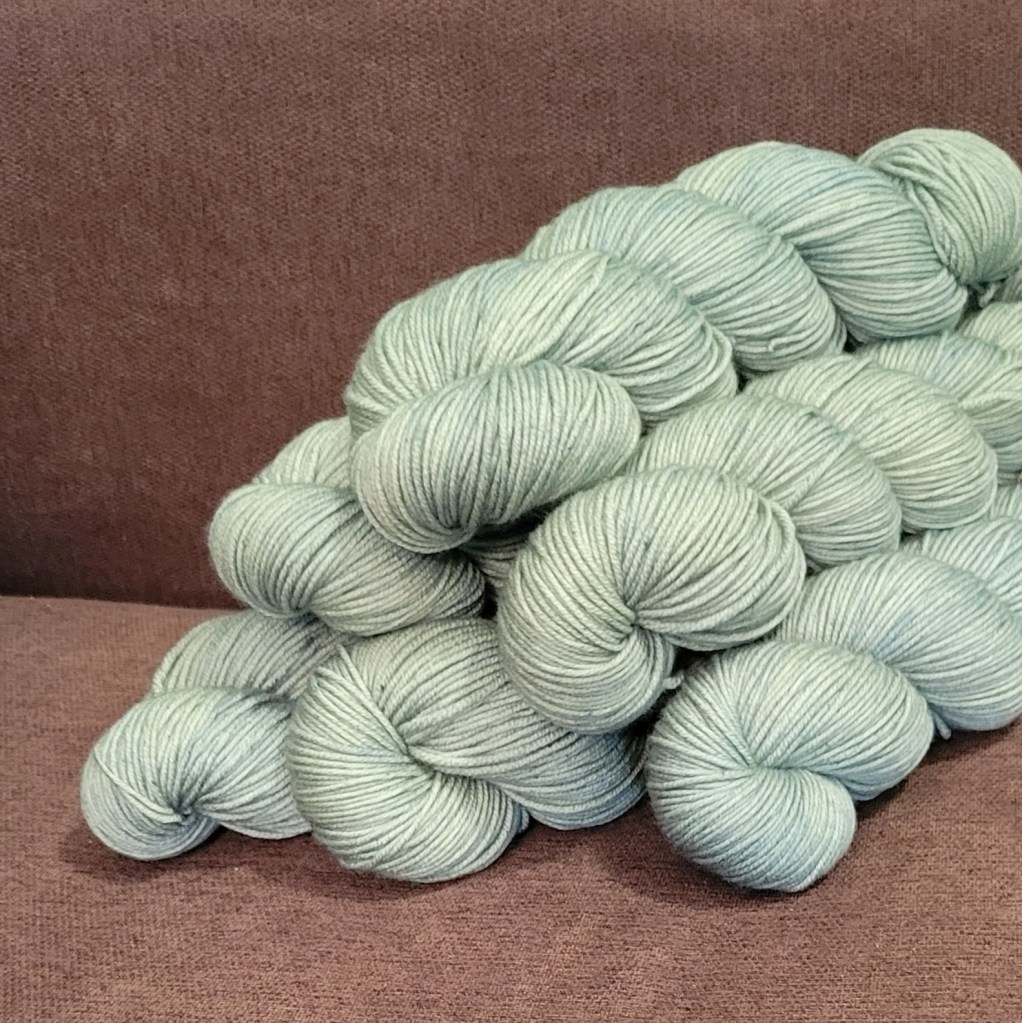
My beautiful yarn came in from Jems Luxe Fibers so I’m swatching for the Fireworks 4 Day KAL today! Look below for a peek at the colorway I ordered. If you are just joining us, get all the Fireworks KAL details here.

If this is your first time swatching, here are a few of tips.

  • Use your size 6 needles because you want to use the needles you’re going to use for the body of the sweater.
  • Cast on more than 20 stitches. The edges tend to warp a little bit, so you won’t get an accurate measurement if you count the stitches on the edge.
  • Your swatch should be a little more than 4″ x 4″ of stockinette stitch (k on one side, p on the other). There’s no “right” way to do it other than that. But if you like specific directions, I’ll post row by row directions below.
  • Notice the gauge says the swatch should be “blocked.” For the most accurate gauge, wash your block the same way you’ll wash your finished piece. When you wash different fibers, they may grow or shrink, so you’ll definitely want to take that into account for your sweater.

Let me know if you have any other questions! Happy swatching!

Swatch pattern

Cast on 28 sts.

Row 1: (K1, P1) across.

Row 2: (P1, K1) across.

Rpt rows 1 & 2.

Row 4: (K1, P1) twice, K 20, (K1, P1) twice.

Row 5: (P1, K1) twice, P 20, (P1, K1) twice.

Rpt rows 4 & 5 thirteen more times.

Rpt rows 1 & 2 twice. Bind off.

Luxe DK in colorway Euclase by Jems Luxe Fibers

Welcome to the Fireworks KAL!

This is your Olive Knits Fireworks Sweater Headquarters! Here, you can find links to everything you need to participate in the Fireworks Knitalong throughout the month of July. Let us know you are knitting with us by signing up here. If this is your first sweater, great! I’ll also have a variety of resources available to you to make it fun and easy.

A huge thanks to Olive Knits for organizing this worldwide KAL, and to Jems Luxe Fibers for hosting our small group KAL! First, bookmark these websites for easy access:

https://www.oliveknits.com/fireworks-4day-kal/ Olive Knits Fireworks KAL page: Contains the Pattern Details link, Events Timeline, Swag and much more!

https://jemsluxefibers.com/ Jems Luxe Fibers for ordering yarn.

https://www.facebook.com/groups/758681594755974 Join Jems: For the Love of Knitting and Cooking Facebook Group for meetings, updates, and to share progress.

https://katieclarkcrochet.com/ I’m your hostess and KAL leader! Look here for resources, videos, updates, tips and more. Email me at KatieClarkCrochet@gmail.com for personalized help along the way!

Event Dates

June 22nd: Swatch Party: Zoom party hosted by Jems Luxe Fibers, See Jems: For the Love of Knitting and Cooking Facebook Group for details about how to participate

July 1st: Virtual Cast On Party – Livestream: Hosted by Olive Knits

July EVERY TUESDAY: Weekly Zoom meetings hosted by Jems Luxe Fibers, See Jems: For the Love of Knitting and Cooking Facebook Group for details about how to participate

• July 6: Working the yoke

• July 13: Dividing for the body and working the body

• July 20: Working the sleeves

• July 27: Finishing

July ALL MONTH: Weekly livestreams and prize drawings with Marie on Facebook 

July 30th: Official end of KAL and Virtual Bind Off Party – Livestream

What You May Have Missed

• Order your pattern and yarn ASAP! The pattern is discounted for a limited time only. Order your yarn soon so you will receive your order in time to cast on with us!

• Let us know you are knitting with us by signing up here.

• June 7: Olive Knits unveils the Fireworks Sweater! View the video here.

Resources

Learn tips and tricks for swatching here.

• Video: How to read the information in the Pattern details, what materials you will need, and prepare to swatch

• Photo Tutorial on Dividing the Sleeves in a top down sweater

• Find errata on the Fireworks Pattern at the bottom of this page.

If you are enjoying this KAL and the resources I have provided, you can show your appreciation!

• View, Like, Subscribe, and Share my content on Instagram @katie_clark_crochet, Facebook @katieclarkcrochet, and here at https://katieclarkcrochet.com

• Consider leaving a tip in my Tip Jar!

Christmas in September

2020 has been something else, hasn’t it?! I don’t know about you, but I’m looking forward to the end of the year! There has to be a light at the end of this tunnel. And it should have something to do with Christmas. And yarn. How about a crochet along?

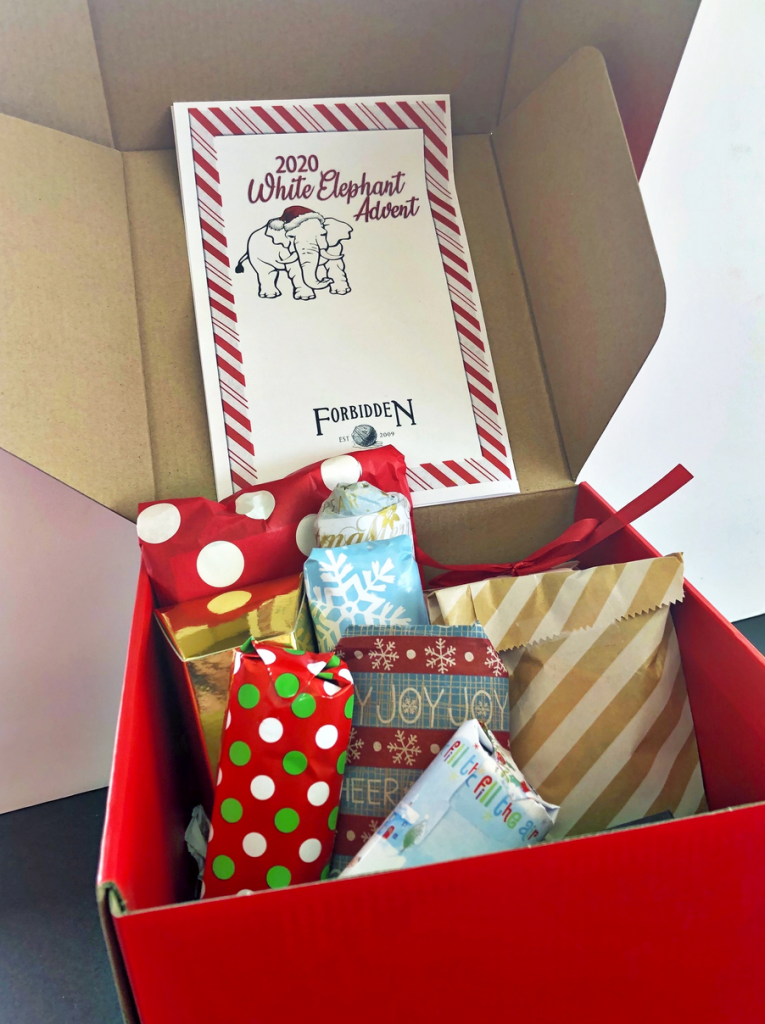
Forbidden Fiber Company is introducing this year’s advent calendar, and it’s gonna be so fun! It’s a White Elephant Advent Calendar! Have you played a White Elephant or Dirty Santa gift exchange? It’s like that. You choose a squishy present out of the box and see what you get. If you like it, you keep it to use in your pattern today. If you don’t, put it back and choose another! The catch is, you eventually get to keep them all!

The White Elephant Advent Calendar comes with everything you need to complete a surprise pattern by the end of the month: 18 coordinating hand-dyed mini-skeins, A MKAL (knit) pattern designed by Afifa Knits OR MCAL (crochet) pattern designed by me, Katie Clark, and a few extra goodies throughout the month.

If you choose the crochet option, find me on Facebook along the way for help, tips, and a good time! Are you ready to get started? Find the MCAL pattern here.

Traveling with Stitch Markers

I just got back from Boston, and I didn’t lose a single stitch marker! That is a big feat after knitting on airplanes and subways and in meetings (don’t tell!) and sessions. I usually drop stitch markers just sitting on the couch, so I had to figure out a way to hold on to them. My secret is a life line for my stitch markers. Here’s how I did it.

Set up:

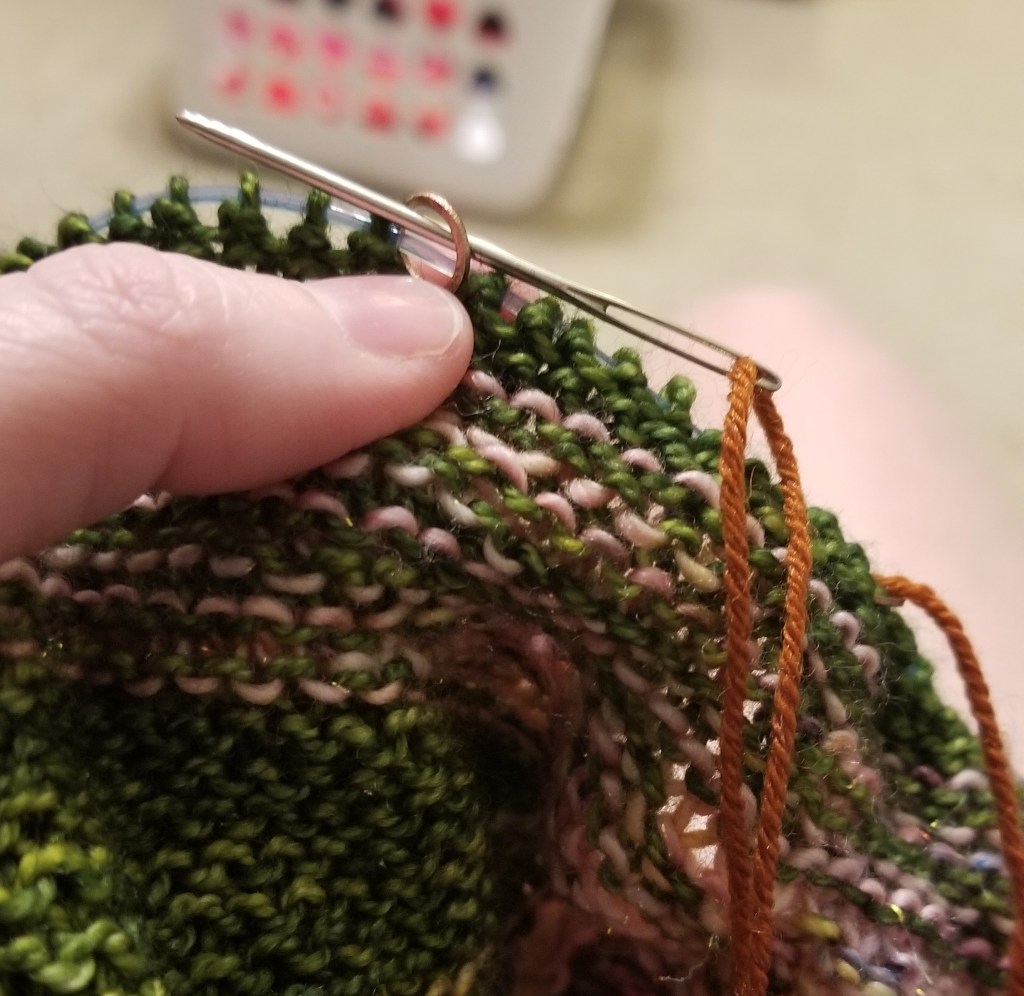
Thread the Life Line through markers
with a tapestry needle.
  1. Choose a sock weight yarn in contrasting color. Cut a length at least as long as your needles and up to as wide as your project’s finished size.
  2. With your stitch markers in place on the needles, thread the life line through each stitch marker on your needles.
    • If you have to add stitch markers throughout your pattern, I recommend using open stitch markers that clip closed or bulb pins so you can add them to the life line later.
    • If you use closed markers, you must add them to the life line in the correct place before you continue to step 3. They will dangle from your life line as you work, and that’s ok.
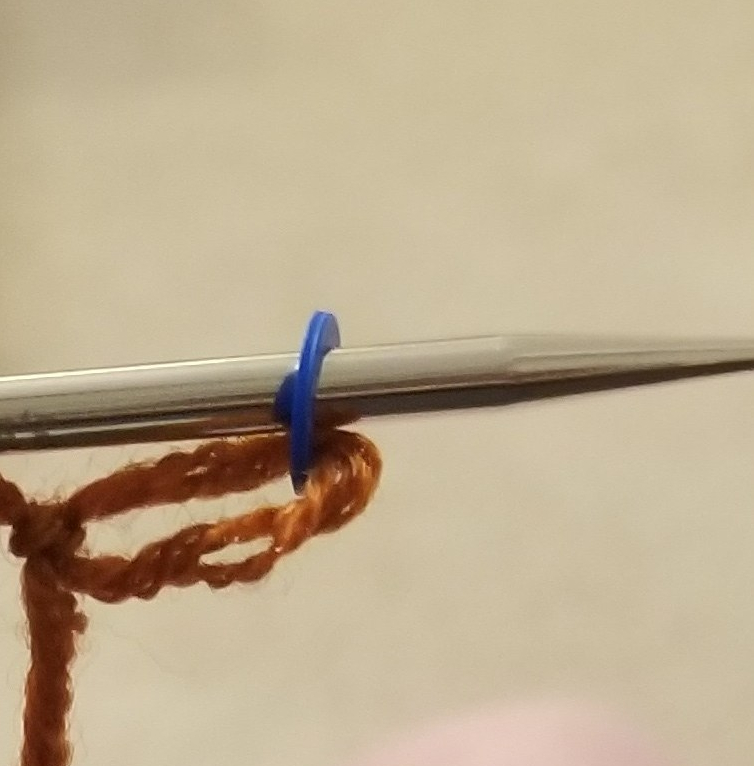
  3. Choose 2 extra stitch markers the same size or bigger. Tie one to each end of your life line to keep it from becoming loose from your work. Your last marker can stay on the needle or dangle free.

Working with the Life Line:

  • Always keep the life line on the same side throughout your row.
  • Do not allow the life line to wrap or yarn over your needles as you work.
  • I recommend working with the life line on the side facing you. Stitch to the first marker. With the life line in front, slip marker purlwise.
Stitched over marker
This is what it looks like when you carry your life line on the opposite side and you slip the marker with the yarn in back.
  • If you have to turn in the middle of the row (for example, when working wraps and turns), the life line must fall to the side away from you. In this case, work to the marker, and with the working yarn in front, slip the marker purlwise. If you don’t do this, the marker will be stitched in like this:

Trouble shooting:

  • If you stitch over your marker as above, you can continue your row. When you come back to the marker, slip it off the needle, pull the marker through the stitch to free it, and place it back on the needle.
  • If you wrap or yarn over your life line, it will become entangled in your work. You must unknit back to the mistake and unwrap the life line from the needle.
  • I prefer using bulb pins with this technique. The large end sits in place on the needle and the small end dangles down a little bit allowing the life line to hang out of your way as you stitch.